- Best Price! Direct China Factory!
- Send Inquiry
WhatsApp/WeChat: 0086-137-36454395

 English
 Spanish
 German
 Russian
 Arabic
 Portuguese
 Italian
 French
 Hebrew
 Turkish
12
Oct
Why We Cannot Use Industrial Casters as Medical Casters
At first glance, industrial casters and medical casters might look similar — both are wheels designed to move heavy equipment smoothly and safely. However, the environments they are used in and the performance requirements they must meet are completely different. Using industrial casters in medical equipment is not recommended and can even create serious safety and hygiene risks. Here’s why.
1. Different Design Purposes
Industrial casters are designed for factories, warehouses, and manufacturing lines where equipment must carry heavy loads, roll on rough floors, and resist impact or vibration.
Medical casters, on the other hand, are used in hospitals, clinics, and care facilities where patient safety, smooth movement, and cleanliness are the top priorities.
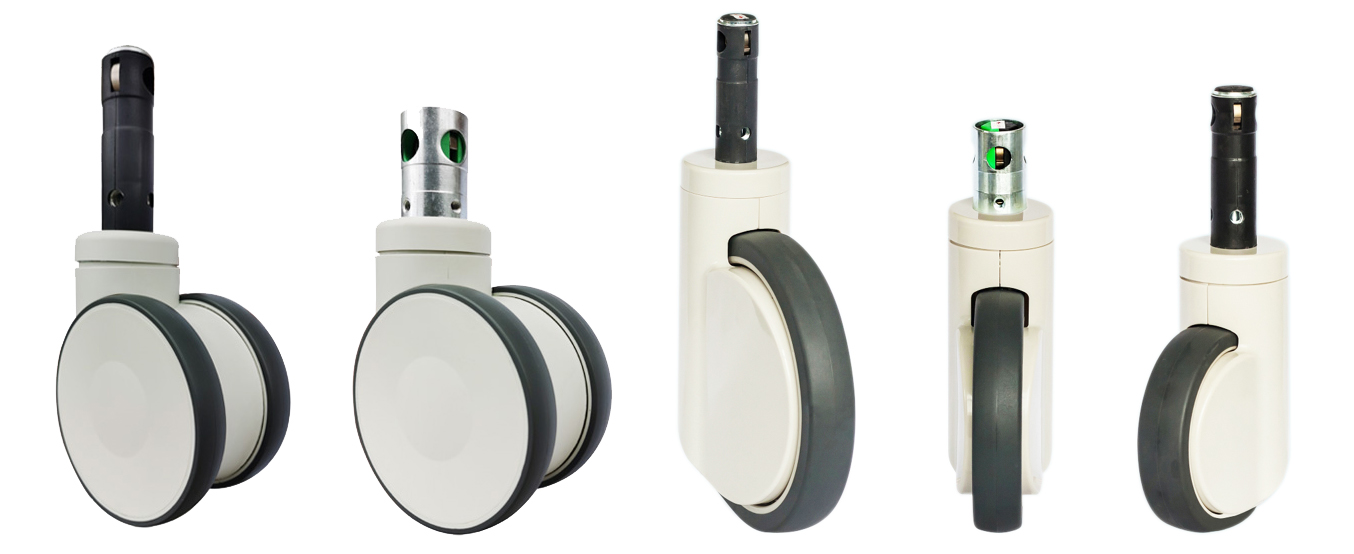
Medical casters are specifically engineered to meet strict healthcare standards. They must roll silently, resist corrosion from cleaning chemicals, and ensure smooth maneuverability on delicate hospital flooring. Industrial casters simply do not meet these unique requirements.
2. Hygiene and Infection Control
One of the biggest differences is hygiene.
In medical environments, all components — including casters — must be easy to clean and resistant to disinfectants. Medical casters are made from materials that prevent bacterial growth and withstand frequent sterilization. Many feature sealed bearings and closed housings to stop dirt, dust, and fluids from entering.
By contrast, most industrial casters are open-structured, exposing bearings and moving parts to grease, dust, and contamination. If these are used in hospitals, they can easily trap bacteria or body fluids, increasing the risk of infection. Therefore, using industrial casters in medical equipment would violate hospital hygiene standards.
3. Noise Control
Hospitals require a quiet environment to help patients recover and reduce stress.
Medical casters use special soft wheels, precision bearings, and vibration-absorbing materials to roll silently over smooth floors. They also eliminate rattling noises caused by metal components.
Industrial casters, in contrast, are often designed for noisy environments and heavy-duty use. They are usually made from hard materials like steel or cast iron that create loud rolling sounds — completely unsuitable for medical beds, carts, or trolleys.
4. Safety and Braking Systems
Safety is another key reason why industrial casters cannot replace medical casters.
Medical casters often feature advanced safety systems, such as central locking, directional locks, and deadman brake systems that automatically engage when released. These mechanisms prevent accidental movement of hospital beds or stretchers and ensure patient stability.
Industrial casters usually have manual brakes or no brakes at all, as they are designed for equipment that doesn’t transport people. Using them in medical devices could cause sudden rolling or uncontrolled movement — a serious safety hazard.
5. Floor Compatibility and Damage Prevention
Hospital floors are typically made of vinyl or epoxy, which must remain clean and scratch-free. Medical casters use non-marking wheels to prevent leaving stains or damage.
Industrial casters, however, are often made with hard treads that can scratch, dent, or leave marks on delicate surfaces. Over time, this could damage hospital floors and increase maintenance costs.
6. Compliance with Standards
Medical casters must comply with international safety and hygiene standards, such as ISO 22882, EN 12531, or other medical equipment regulations. These certifications ensure the caster’s performance under medical conditions.
Industrial casters do not meet these standards, and using them in medical equipment could make the product non-compliant — creating legal and safety issues for manufacturers and hospitals.
7. Longevity and Maintenance
Because medical casters are used in critical environments, they are built for durability and reliability under specific conditions. They use corrosion-resistant materials, sealed designs, and maintenance-free bearings.
Industrial casters might corrode quickly due to exposure to cleaning chemicals and could fail under constant sterilization.
While industrial casters may seem cheaper or more readily available, they are not suitable for medical use. The differences in hygiene, noise control, safety features, and regulatory compliance are too significant to ignore. Choosing proper medical-grade casters ensures safety, reliability, and compliance — protecting both patients and medical staff.
For hospitals, medical bed manufacturers, or healthcare equipment suppliers, using the right type of caster is not just a matter of performance — it’s a matter of safety and trust